What Makes a Good Refrigeration Repair Company
A failed refrigerator rarely gives much warning. One day it is holding temperature, the next it is cycling too often, leaking water, icing over, or putting valuable food and equipment at risk. For a home, that is frustrating. For a restaurant, grocery store, lab, warehouse, or convenience store, it can become expensive fast.
That is why choosing the right refrigeration repair company matters. The best companies do more than show up with tools. They protect perishable inventory, explain what went wrong, fix the real cause, and help prevent the same problem from coming back.

A good company understands the equipment it services
Refrigeration is not one single trade. A residential kitchen refrigerator, a walk-in cooler, an ice machine, a display case, and an industrial cold storage system all work on similar principles, but they fail in different ways.
A strong repair company knows the equipment type before it sends a technician. That helps the technician arrive with the right gauges, leak detection tools, replacement parts, and safety gear.
Common systems may include:
Walk-in coolers and freezers
Reach-in refrigerators
Commercial ice machines
Refrigerated prep tables
Merchandisers and display cases
Undercounter refrigerators
Residential refrigerators and freezers
Cold storage and warehouse equipment
The company does not need to claim it fixes every system ever made. In fact, a clear specialty is often a good sign. A company that says, “We service commercial walk-ins and ice machines, but we do not handle sealed residential units,” is being honest. That is better than accepting every job and learning on the customer’s equipment.
Good technicians diagnose before they replace parts
One of the biggest differences between a good repair company and a poor one is the way it handles diagnosis.
Weak service often looks like this: the technician hears the complaint, replaces the most likely part, collects payment, and leaves. If the same problem returns days later, the customer pays again.
Good service takes more work. The technician checks the full system, confirms the failure, and looks for the underlying cause.
For example, a cooler that is not holding temperature could have:
A dirty condenser coil
A failing fan motor
A refrigerant leak
A bad door gasket
Ice buildup from airflow problems
A thermostat or control issue
Poor room ventilation around the unit
Electrical problems at the circuit or component level
Those problems can feel the same to the person using the equipment. They are not the same to repair.
A good technician asks when the problem started, whether it happens all day or only during peak use, what temperature the unit is reaching, and whether any recent cleaning, construction, or power event occurred. Then they test. They do not guess.
Response time matters, but so does the quality of the response
Fast service is important in refrigeration. When a freezer rises above safe temperature, the clock starts. Food service businesses may need to protect inventory, shift product to another unit, or adjust operations until the repair is complete.
Still, speed alone is not enough. A company that rushes out quickly but cannot fix the issue is not much help.
A dependable refrigeration company offers a realistic response window and keeps it. If an emergency call is available, the company explains how emergency service works, including after-hours rates. If same-day service is not possible, it says so early so the customer can make other plans.
Clear communication during the wait is part of good service. A simple update can make a big difference, especially when a business is trying to protect inventory or keep a kitchen running.
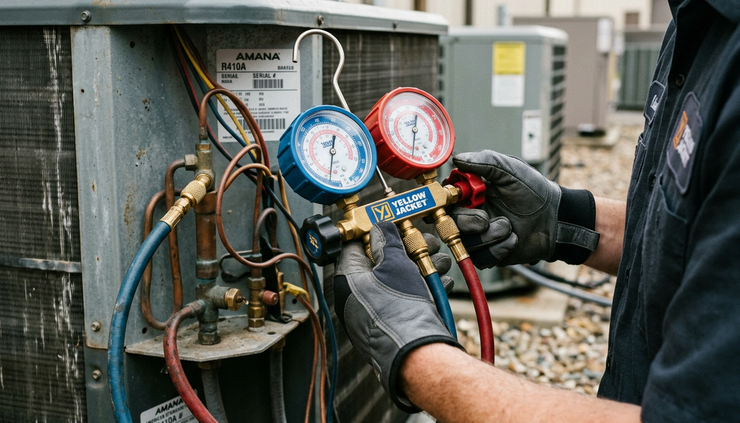
Licensing, insurance, and refrigerant handling should be taken seriously
Refrigeration repair often involves electrical work, pressurized systems, and refrigerants. A good company follows the rules that apply to its work.
In the United States, technicians who handle regulated refrigerants need proper EPA certification. Many states or local areas also have licensing requirements for contractors or mechanical work. Requirements vary, but a responsible company can explain what applies and show proof when asked.
Insurance matters too. A repair company should carry coverage appropriate for the work it performs. That protects both the company and the customer if something goes wrong on-site.
This is not a paperwork formality. Refrigeration systems can be expensive, and improper service can damage compressors, cause leaks, create unsafe electrical conditions, or lead to repeated failure.
A trustworthy company treats compliance as normal, not as an annoyance.
Pricing should be clear before work begins
Refrigeration repair can involve several costs: a service call, diagnostic time, labor, parts, refrigerant, travel, and after-hours charges. A good company explains these costs before starting work.
That does not mean every repair can be priced over the phone. Many cannot. A technician often needs to inspect the unit before knowing whether the fix is simple or complex.
Still, the company should be clear about:
Service call or diagnostic fees
Hourly labor rates or flat-rate structure
Emergency or after-hours pricing
Estimated parts costs
Approval steps before major repairs
Warranty terms on labor and parts
The key is consent. Customers should not feel surprised by charges they never approved.
A fair company may also tell a customer when repair is not the best choice. If an older unit needs an expensive compressor and has other signs of wear, replacement may make more sense. Good companies earn trust by giving that honest advice, even when it means losing a repair job.
Good companies explain the repair in plain language
Refrigeration systems can be technical, but the explanation should not be confusing. A good technician can describe the problem in simple terms.
For example:
“The condenser coil was packed with debris, so the system could not release heat. That caused high pressure and poor cooling. We cleaned the coil, checked the fan motor, and confirmed the temperature is dropping.”
That explanation tells the customer what happened, what was done, and why it matters.
Poor communication sounds vague:
“System issue. Repaired. Watch it.”
That does not help anyone.
A good company leaves the customer with enough information to understand the repair and spot early warning signs if the problem returns. This is especially useful for businesses where multiple employees use the same refrigerator, cooler, or freezer each day.
Parts quality and repair methods affect long-term results
A repair is only as good as the parts and methods behind it. Good refrigeration companies use suitable replacement parts and follow proper installation practices.
That may mean using manufacturer-approved parts when required, or high-quality equivalent parts when appropriate. It also means doing the small things correctly, such as securing wiring, checking drain lines, testing controls, and verifying temperature after the repair.
Shortcuts can create bigger problems later.
For instance, adding refrigerant without finding the leak may make the unit cool for a short time. The leak remains, the system loses charge again, and the compressor may suffer. That is not a repair. It is a temporary patch.
A good company cares about whether the equipment works next week, next month, and next season.

Preventive maintenance is part of good refrigeration service
Not every refrigeration problem can be prevented, but many common failures start with neglect. Dirty coils, clogged drains, worn gaskets, failing fan motors, and poor airflow can all reduce performance long before the unit stops cooling.
A good refrigeration repair company does not only respond to breakdowns. It helps customers reduce them.
Preventive maintenance may include:
Cleaning condenser and evaporator coils
Checking fan operation
Inspecting door gaskets and hinges
Clearing drain lines
Testing temperature controls
Looking for oil stains that may suggest refrigerant leaks
Checking electrical connections
Confirming proper airflow around equipment
For commercial equipment, routine maintenance can be especially valuable. A cooler that struggles through the hottest part of the year may be giving warnings months before it fails.
Good companies explain maintenance without scare tactics. They help the customer understand which tasks are essential, which are optional, and how often service makes sense for the equipment and workload.
The company should respect the space it works in
Refrigeration repair often happens in busy kitchens, grocery aisles, storage rooms, garages, and utility areas. A good technician works safely and leaves the area cleaner than they found it.
That includes:
Keeping tools organized
Protecting nearby food and surfaces
Avoiding unnecessary disruption
Communicating when power must be shut off
Cleaning up old parts, packaging, and debris
Following site rules when working in food service or retail spaces
Respect also shows in how the technician treats people on-site. Good technicians answer reasonable questions, avoid talking down to customers, and stay focused on the job.
Professionalism is not about fancy uniforms. It is about care, safety, and consistency.
Reviews are useful when they mention specific behavior
Online reviews can help, but only if they are read carefully. A five-star rating is nice, yet the words behind the rating matter more.
Look for reviews that mention specific signs of good service:
The technician arrived when promised
The company explained the cost upfront
The repair lasted
The technician found a problem another company missed
The company handled an urgent issue well
The customer understood what was repaired
The company followed up when needed
Be cautious with patterns. One negative review does not tell the whole story. Repeated complaints about missed appointments, surprise pricing, poor communication, or repeat failures are more meaningful.
A good company often has customers who describe the same strengths again and again.
Warranty and follow-up show confidence in the work
A good repair company stands behind its work. That does not mean every part lasts forever or every future issue is covered. Refrigeration systems have many components, and one repair cannot prevent all failures.
Still, the company should offer clear warranty terms on the work it performed. The customer should know what is covered, for how long, and what could void the warranty.
Follow-up also matters. If the unit needs time to pull down to temperature, the technician should explain what to expect. If the repair involves a leak check or a part that may need monitoring, the company should say so.
A clear warranty is a sign of accountability. It tells the customer the company is not just trying to close the ticket and disappear.

Red flags can save you from a bad repair experience
Some warning signs are easy to spot before hiring a company.
Be careful if a refrigeration repair company:
Refuses to discuss basic pricing
Cannot explain licensing or certification
Pushes major repairs before inspecting the system
Gives vague answers about experience
Has no clear warranty terms
Uses pressure tactics
Repeatedly misses appointment windows
Will not provide an invoice or repair summary
Treats refrigerant leaks as something to ignore
The biggest red flag is a company that does not want questions. Skilled repair professionals are usually comfortable explaining their work. They may not be able to diagnose the equipment over the phone, but they can explain their process.
The best choice is the company that reduces risk
Refrigeration repair is about more than restoring cold air. It is about protecting food, equipment, time, and money. A good company brings technical skill, clear communication, fair pricing, proper credentials, and respect for the customer’s space.
The right company will not always be the cheapest. It may not always be the one that can arrive first. The best choice is the one most likely to diagnose correctly, repair safely, and help the system keep working after the technician leaves.
When comparing options, ask simple questions. What equipment do they service most often? How do they charge for diagnosis? Are their technicians certified to handle refrigerants? What warranty do they provide? How will they explain the repair after the work is done?
The answers will tell you a lot. A good refrigeration repair company makes a stressful breakdown feel manageable, then leaves the equipment, and the customer, in better shape than before.


Comments