The 3 R's of Refrigeration Explained
Refrigeration systems do more than keep food cold and buildings comfortable. They also handle refrigerants, chemicals that must be managed carefully because they can affect equipment performance, safety, operating costs, and the environment.
That is where the 3 R’s of refrigeration come in: Recover, Recycle, and Reclaim. These three practices describe what happens to refrigerant when it is removed from a system, serviced, cleaned, reused, or sent away for full processing.

Why the 3 R’s matter
Refrigerant is not something to casually release, mix, or guess about. In the United States, venting many refrigerants during service is prohibited under federal rules, and technicians who work with regulated refrigerants generally need proper certification. Beyond the legal side, poor refrigerant handling can damage equipment and lead to unreliable cooling.
The 3 R’s give technicians a shared process for handling refrigerant responsibly.
They help answer three basic questions:
Can the refrigerant be removed safely?
Can it be cleaned enough for reuse in the same owner’s equipment?
Does it need to be processed to meet new-product purity standards?
Each R has a specific meaning. They are related, but they are not interchangeable.
The first R is recover
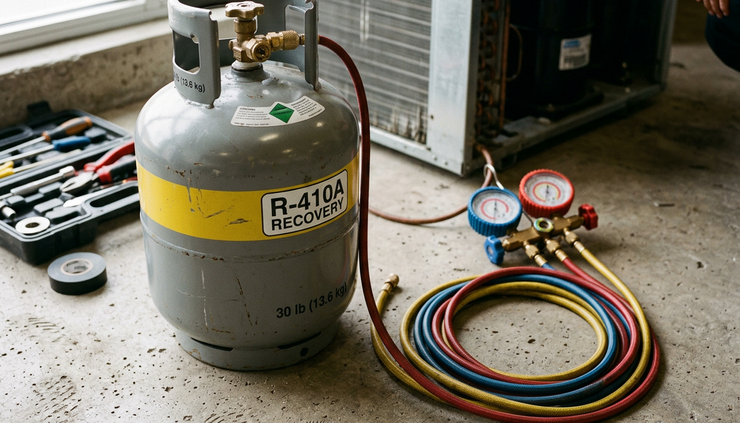
Recovery means removing refrigerant from a refrigeration or air conditioning system and storing it in an approved external container. The key point is simple: the refrigerant is taken out of the system without being released into the air.
Recovery usually happens before:
Opening a system for repair
Replacing a compressor, evaporator, condenser, or line set
Retiring old equipment
Converting a system to a different refrigerant where allowed
Testing a system that may have contamination
A recovery machine pulls refrigerant from the system and transfers it into a recovery cylinder. The technician must use the correct cylinder, avoid overfilling it, and keep refrigerants separated by type. Mixing refrigerants can make the contents difficult or impossible to reuse without special processing.
Recovery does not mean the refrigerant is clean. It only means it has been removed and contained.
That difference matters. A recovered refrigerant may contain oil, moisture, air, acid, or particles from the system. It may be usable after additional steps, or it may need to be sent to a reclamation facility.
The second R is recycle
Recycling refrigerant means cleaning it for reuse, usually by passing it through equipment that removes oil, moisture, acidity, and solid debris. Recycling improves the condition of recovered refrigerant, but it does not make it the same as brand-new refrigerant.
In many service situations, recycled refrigerant may be reused in the same system or in other equipment owned by the same person or company, depending on the refrigerant and applicable rules. It should not be treated as a universal replacement for reclaimed or virgin refrigerant.
Recycling is common when a technician expects the refrigerant to be reasonably clean and wants to reuse it after a repair. For example, a supermarket refrigeration rack may need a component replaced. If the refrigerant is compatible and not badly contaminated, recycling can help reduce waste and avoid unnecessary disposal.
Good recycling practice includes:
Using proper filtration and drying methods
Keeping refrigerant types separate
Checking for contamination before reuse
Labeling cylinders clearly
Following equipment manufacturer instructions
Recycling is not a shortcut for problem refrigerant. If a compressor burnout has put acid and debris into the system, basic recycling may not be enough. In that case, reclamation or disposal may be the responsible path.
The third R is reclaim
Reclamation is the highest level of refrigerant processing among the three R’s. Reclaiming refrigerant means sending it through specialized processing so it meets the purity standard required for resale or broad reuse.
In the United States, reclaimed refrigerant is commonly processed by certified reclaimers. The goal is to clean and test the refrigerant so it meets recognized purity specifications for that refrigerant type.
Reclamation is often the right choice when refrigerant is:
Mixed with another refrigerant
Contaminated with excess air or moisture
Removed from equipment being scrapped
Unfit for simple recycling
Intended for resale or use beyond the original owner’s equipment
Reclamation supports the refrigerant supply chain, especially as older refrigerants become less available. When refrigerant from retired systems gets reclaimed, it can often return to use instead of being wasted.

How recover, recycle, and reclaim compare
The easiest way to understand the 3 R’s is to look at what each one actually does.
Process | What it means | Typical result |
Recover | Remove refrigerant from a system and store it in a cylinder | Refrigerant is contained, but not necessarily cleaned |
Recycle | Clean recovered refrigerant using filters, dryers, or recycling equipment | Refrigerant may be suitable for limited reuse |
Reclaim | Process and test refrigerant to meet purity standards | Refrigerant can be returned to broader approved use |
Think of it like handling used motor oil. Draining it is not the same as filtering it, and filtering it is not the same as refining it back to a high standard. Refrigerant works the same way. Each step has a different purpose.
Common mistakes to avoid
Many refrigeration problems start with small handling mistakes. The most common ones are also the easiest to prevent.
Mixing refrigerants
Even small amounts of the wrong refrigerant can contaminate a cylinder. Always confirm the refrigerant type before recovery.
Using the wrong cylinder
Recovery cylinders are designed for this work. Disposable cylinders should not be refilled.
Overfilling a cylinder
Refrigerant expands with temperature. Overfilled cylinders can become dangerous.
Assuming recycled means reclaimed
Recycled refrigerant has been cleaned. Reclaimed refrigerant has been processed and tested to a higher standard.
Skipping labels
Every cylinder should be clearly marked with the refrigerant type and condition. Guessing later creates risk.
Why this matters for system performance
Proper refrigerant handling protects more than the environment. It also protects the refrigeration system itself.
Moisture can freeze at metering devices and restrict flow. Air can raise pressures and reduce efficiency. Acid can damage windings and internal parts. Debris can clog screens, valves, and filters.
When refrigerant is recovered, recycled, or reclaimed correctly, technicians can make better service decisions. They are less likely to put contaminated refrigerant back into a system, and more likely to preserve equipment life.
That means fewer repeat repairs, better cooling, and safer work.

The simple way to remember the 3 R’s
Use this plain-language version:
Recover means take it out and contain it.
Recycle means clean it for limited reuse.
Reclaim means process and test it back to a recognized purity standard.
The 3 R’s are not just technical terms. They are the basic framework for responsible refrigerant management. When they are followed correctly, refrigeration work becomes safer, cleaner, and more reliable.
A good rule of thumb is this: never guess what is in a system, never vent refrigerant, and never treat recovered refrigerant as clean until it has been properly evaluated. That mindset is the foundation of good refrigeration service.


Comments