Commercial Refrigerator Temperature Guide for Food Safety and Food Preservation
A commercial refrigerator can look clean, sound normal, and still hold food at an unsafe temperature. That is the risk. Temperature problems are often invisible until product quality drops, food is discarded, or a health inspection flags the issue.
For restaurants, grocery stores, cafeterias, hotels, healthcare kitchens, and any operation that stores perishable food, refrigeration is a food safety control point. The right temperature slows bacterial growth, protects texture and flavor, reduces waste, and supports compliance with food safety standards.
This Commercial Refrigerator Temperature Guide for Food Safety and Food Preservation explains the safe temperature ranges, how to monitor them, how to correct problems, and how to maintain equipment before small issues become expensive failures.

The safe temperature range for commercial refrigeration
For most refrigerated, time and temperature control for safety foods, cold holding should be 41°F or below. Many operators set refrigerators slightly colder, often around 36°F to 38°F, to provide a margin of safety against door openings, warm deliveries, and normal defrost cycles.
Freezers are typically kept at 0°F or below. Frozen food held at 0°F remains safe when continuously frozen, but quality can still fall over time due to freezer burn, dehydration, and packaging failures.
The danger zone for food safety is generally considered above 41°F and below 135°F under the FDA Food Code. In that range, harmful bacteria can grow more quickly, especially in foods such as cooked meats, poultry, seafood, cooked rice, cut melon, leafy greens, dairy products, and prepared sauces.
Storage type | Recommended temperature | Why it matters |
Reach-in refrigerator | 36°F to 38°F set point, 41°F or below food temperature | Keeps food safely cold during normal use |
Walk-in cooler | 35°F to 38°F set point, 41°F or below food temperature | Provides stable storage for bulk inventory |
Prep table refrigerator | 33°F to 40°F, depending on design and food load | Compensates for frequent lid openings |
Display case | 35°F to 40°F, verified at product level | Protects food while customers or staff access it |
Commercial freezer | 0°F or below | Preserves frozen food quality and safety |
The set point is not always the same as the food temperature. Air temperature changes faster than food temperature. A unit may briefly rise when the door opens, while the actual food remains safe. That is why food temperature checks matter, not just the number on the display.
Why proper temperature protects food quality
Refrigeration does not stop all biological and chemical activity. It slows it. When food stays in the correct temperature range, it holds its quality longer and remains safer to serve.
Improper temperatures can affect food in several ways.
Bacterial growth increases
Pathogens such as Salmonella, E. coli, Listeria, and Staphylococcus aureus can grow when food is held too warm. Some bacteria may not change the smell, taste, or appearance of food, which makes temperature control essential.
Spoilage happens faster
Spoilage organisms break down food and cause sour odors, slime, discoloration, gas buildup, and off flavors. These changes are more likely when food is stored above safe cold-holding temperatures.
Texture and moisture suffer
Leafy greens wilt, dairy separates, meat loses freshness, and prepared foods dry out or become watery when temperatures fluctuate. Freezing temperatures in a refrigerator can also damage produce and sauces.
Shelf life becomes unpredictable
A cooler that swings from 35°F to 45°F throughout the day creates uncertainty. Food that should last several days may need to be discarded much sooner.
A refrigerator is not just storage equipment. It is part of the food safety system.
How to monitor refrigerator temperatures correctly
Temperature monitoring should be routine, documented, and easy for staff to perform. A display panel is useful, but it should not be the only source of truth.
Use the right thermometer in the right place
Every commercial refrigerator should have an accurate thermometer placed where it reflects actual storage conditions. In a reach-in unit, that usually means near the warmest area, often close to the door. In a walk-in cooler, place thermometers in more than one zone if the space is large or heavily stocked.
Use these tools together:
Built-in digital display Useful for quick checks, but it may read air temperature near the sensor.
Independent refrigerator thermometer Helps confirm the unit is holding the proper range.
Probe thermometer Used to check the internal temperature of food.
Data logger Records temperature over time and helps identify overnight problems, defrost spikes, or staff use patterns.

Check temperatures on a schedule
At a minimum, refrigerated units should be checked at the start of operations and again throughout the day. High-volume kitchens and retail cases may need more frequent checks because doors open often and food turnover is faster.
A practical temperature log should include:
Date and time
Unit name or location
Air temperature
Food temperature when needed
Staff initials
Corrective action if the temperature is out of range
Documentation helps prove control during inspections and gives managers a pattern to review. If the same cooler runs warm every afternoon, the log can reveal the problem before food is lost.
Verify with product temperatures
Air temperature is useful, but food safety depends on the temperature of the food. Check items that are most at risk, such as cooked chicken, seafood, dairy-based sauces, cut fruit, and prepared salads.
Use a clean, sanitized probe thermometer. Insert it into the thickest part of the food or between packages when checking packaged items. Avoid touching the pan or container, since that can give a false reading.
How to adjust commercial refrigerator temperatures
Adjustments should be careful and measured. Turning a thermostat sharply colder may freeze product, while setting it too warm can create a safety risk.
Start with the set point
If food temperatures are close to the limit, lower the set point by 1°F or 2°F and recheck after the unit stabilizes. Large changes can cause overshooting, especially in smaller reach-in units.
Give the refrigerator time to respond. Depending on the size of the unit, load, and surrounding conditions, stabilization can take several hours.
Account for door openings
A cooler used during lunch rush will run warmer than the same cooler left closed overnight. If the unit only warms during peak use, the issue may not be the thermostat. It may be workflow.
Practical fixes include:
Keep high-use items near the front to shorten door-open time.
Avoid holding the door open while loading or searching.
Use clear labels so staff can find items quickly.
Store backup product in a walk-in cooler when possible.
Do not overload shelves
Cold air must move around food. Overloading blocks airflow and creates warm pockets, especially in the center or back of the unit. Leave space between containers and avoid lining shelves with cardboard, foil, or sheet pans unless the manufacturer allows it.
In walk-in coolers, keep product away from evaporator fans and off the floor. Use shelves that allow air circulation.
Cool hot food before refrigeration
Commercial refrigerators are designed to hold cold food cold. They are not a substitute for proper cooling procedures.
Putting large containers of hot soup, rice, chili, or sauce directly into a cooler can raise the temperature of the entire unit. Use shallow pans, ice baths, blast chillers, or approved cooling methods before storing hot food in refrigeration.
How temperature affects different food categories
Different foods react differently when temperatures drift. Knowing the risks helps staff prioritize checks and corrective action.
Food category | Temperature concern | Common signs of trouble |
Raw meat and poultry | Pathogen growth and drip contamination | Sour odor, excessive purge, discoloration |
Seafood | Fast quality loss and odor development | Strong smell, soft texture, cloudy liquid |
Dairy | Spoilage and separation | Sour smell, curdling, swelling containers |
Fresh produce | Freezing or wilting | Limp leaves, ice crystals, water-soaked texture |
Prepared foods | Unsafe bacterial growth after cooking | No reliable visual sign in many cases |
Frozen foods | Thawing and refreezing | Ice crystals, damaged packaging, freezer burn |
Prepared foods deserve special attention because they often pass through several steps before service. Cooking, cooling, storing, reheating, and holding each carry temperature requirements. A mistake during cold storage can undo earlier controls.
Best practices for safe cold storage
Temperature control works best when it is supported by good storage habits. These practices reduce risk and make refrigerator performance more reliable.
Store food in the correct order
Arrange food to prevent cross-contamination. Ready-to-eat foods should be stored above raw foods. Raw poultry should be stored below raw meat and seafood to prevent drips from contaminating other items.
A common top-to-bottom order is:
Ready-to-eat foods
Seafood
Whole cuts of beef and pork
Ground meats
Poultry
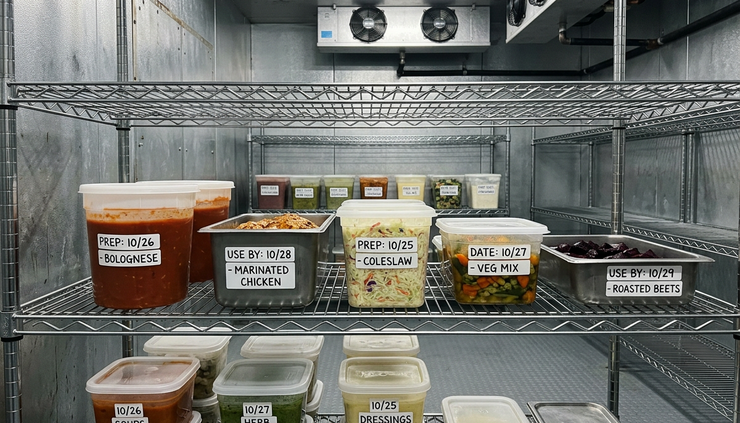
Use covered, food-grade containers and avoid storing food in opened cans. Label containers with product name, preparation date, and discard date according to your food safety plan.
Keep doors sealed and closed
Door gaskets have a major effect on temperature control. A cracked gasket, loose hinge, or door that does not self-close can let warm air enter all day.
Train staff to check that doors close fully after each use. For walk-in coolers, strip curtains can help reduce warm air exchange, but they must be kept clean and in good condition.
Separate delivery checks from storage checks
Receiving is a major control point. Cold food should arrive at safe temperatures and move quickly into refrigeration. Do not rely on the cooler to correct a delivery that arrived too warm.
Check temperatures on high-risk deliveries, especially meat, poultry, seafood, dairy, and prepared refrigerated foods. Reject products that do not meet safety requirements or show signs of abuse, such as damaged packaging, leaking liquids, or unusual odors.
Regular maintenance that protects temperature control
A commercial refrigerator that is dirty or poorly maintained has to work harder. That leads to temperature swings, higher energy use, more breakdowns, and shorter equipment life.
Clean condenser coils
Dust and grease on condenser coils trap heat. When coils cannot release heat properly, the unit may run longer and still fail to reach temperature.
Clean coils on a regular schedule based on the environment. A bakery, fry kitchen, or dusty storage area may need more frequent cleaning than a low-volume pantry area. Always follow the manufacturer’s instructions and disconnect power when required.
Inspect door gaskets
Look for cracks, looseness, mold, or hardened sections. A simple paper test can help. Close the door on a strip of paper and pull. If the paper slides out with little resistance, the gasket may not seal well.
Replace damaged gaskets promptly. Small gaps can create large temperature problems.
Check fans and airflow
Evaporator fans move cold air inside the cabinet. If a fan fails or gets blocked by product, temperatures become uneven. Listen for unusual noises and check for ice buildup around fan areas.
Never block air vents with boxes, pans, or containers. Good airflow is part of safe storage.
Keep drains clear
Clogged drains can cause water pooling, ice buildup, odors, and slip hazards. Standing water inside a cooler also creates sanitation concerns. Clean drains according to the equipment manual and call a technician if backups continue.
Schedule professional service
Even with good daily care, commercial refrigeration systems need trained service. Technicians can check refrigerant charge, electrical components, defrost controls, sensors, compressors, and fans.
Preventive maintenance is usually less costly than emergency service during a dinner rush or after a full walk-in cooler warms overnight.
Troubleshooting common refrigerator temperature problems
When a commercial refrigerator runs warm, respond quickly. Protect the food first, then diagnose the equipment.
The refrigerator is above 41°F
Check the food temperature, not just the air temperature. If food has been above safe limits for too long, follow your food safety policy and local health code.
Then check basic causes:
Door left open
Heavy loading with warm product
Blocked air vents
Dirty condenser coil
Failed door gasket
Incorrect thermostat setting
Evaporator coil iced over
Fan or compressor problem
Move food to a working refrigerator if needed. Do not keep opening the affected unit while trying to diagnose it.
The refrigerator is too cold
Food freezing in a refrigerator can damage quality and create waste. Produce, eggs, sauces, dressings, and beverages are especially vulnerable.
Common causes include:
Set point too low
Product stored too close to the air discharge
Faulty thermostat or sensor
Poor airflow
Incorrect defrost operation
Adjust the set point gradually and move sensitive foods away from the coldest airflow path.
Temperatures rise at certain times of day
Repeated warm periods often point to use patterns. Lunch prep, delivery stocking, or frequent customer access can overwhelm the unit temporarily.
Review the temperature log and compare it with operations. If the unit cannot maintain safe temperatures during normal use, it may be undersized, poorly located, or in need of service.
Ice builds up inside the unit
Ice on the evaporator coil can reduce airflow and cause warm cabinet temperatures. Possible causes include door leaks, frequent door openings, failed defrost heaters, clogged drains, or humid kitchen conditions.
Do not chip ice with sharp tools. That can damage refrigerant lines. Move food to safe storage and arrange proper service.

What to do when temperatures go out of range
A clear corrective action plan prevents guesswork. Staff should know what to do before a problem occurs.
Follow this sequence:
Verify the reading
Use a calibrated thermometer to confirm air and food temperatures.
Protect the food
Move food to another working refrigerator or freezer if needed.
Limit access
Keep the door closed while deciding next steps.
Document the issue
Record the time, temperature, affected products, and action taken.
Evaluate food safety
Follow your food safety plan, local health department guidance, and time-temperature rules.
Correct the cause
Adjust settings, fix usage practices, or call for service.
Monitor after correction
Continue checking until temperatures remain stable.
When in doubt, do not serve questionable food. The cost of disposal is usually lower than the cost of a foodborne illness complaint, failed inspection, or damaged reputation.
A simple daily checklist for reliable cold holding
Use this checklist to make temperature control part of daily operations.
Task | Suggested timing |
Check and record refrigerator temperatures | Opening, mid-shift, closing |
Check high-risk food temperatures | During prep and service |
Confirm doors close and seal properly | Daily |
Look for blocked vents or overloaded shelves | Daily |
Wipe spills and remove debris | Daily |
Inspect gaskets for damage | Weekly |
Clean condenser coils | As scheduled by environment and manual |
Review temperature logs for patterns | Weekly |
Schedule professional maintenance | Based on equipment use and manufacturer guidance |
Consistency matters more than complexity. A short checklist that staff actually complete is more useful than a detailed binder that no one uses.
The takeaway for safer refrigeration
Commercial refrigerator temperature control is a daily food safety responsibility. Keep refrigerated food at 41°F or below, set units with a safe operating margin, verify temperatures with accurate tools, and document corrective action when readings drift.
Good refrigeration also depends on habits. Do not overload shelves. Keep doors closed. Cool hot foods properly before storage. Clean coils, inspect gaskets, and address unusual noises, ice buildup, or rising temperatures early.
Safe food preservation starts with stable cold storage. When the refrigerator runs correctly and staff monitor it consistently, food lasts longer, waste drops, and safety risks become much easier to control.


Comments